
Manual Handling Duties for Employers: What Good Management Control Should Cover
Thu 29th Oct 2026 by HS Hub
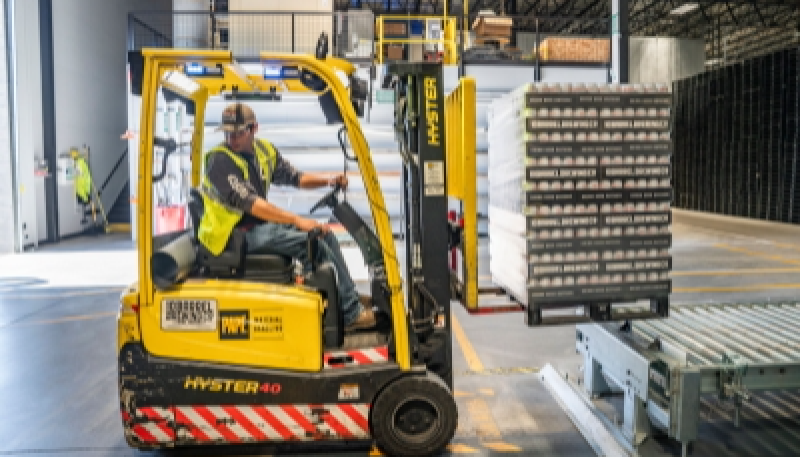
Manual Handling Duties for Employers: What Good Management Control Should Cover

Manual handling compliance depends on how work is designed, assessed and controlled. In Great Britain, employers must avoid hazardous manual handling where reasonably practicable, assess unavoidable hazardous operations and reduce the remaining risk of injury as far as reasonably practicable. Northern Ireland operates under its own 1992 manual handling regulations.
Manual Handling Risk Starts Before The Lift
A worker picking up a load is often the final stage of a much longer management process. The need to handle it may already have been determined by equipment selection, storage arrangements, process layout or the way materials move through the workplace.
Official guidance therefore places avoidance before assessment. Employers should consider whether hazardous handling can be removed through task redesign, mechanisation or automation. It is particularly useful to address this while plant and work systems are being designed.
This gives senior managers an assurance question to ask before reviewing lifting technique: why does the manual handling operation still exist?
Assessment Must Reflect The Work As Performed
Where hazardous handling cannot reasonably be avoided, the employer must assess the risk of injury. Manual handling includes lifting and carrying, but also putting down, pushing, pulling and other movement or support of loads using bodily force.
An assessment needs enough detail to represent the actual exposure. Factors identified in official guidance include posture, movement distance, frequency, load weight and condition, restricted spaces, floors, lighting, temperature and individual capability.
This means similar-looking tasks may need different controls. A load that is manageable in one setting may present different risks when it is handled repeatedly, carried further, moved through a confined area or handled by a worker whose capability needs to be taken into account.
Workforce involvement should form part of the assessment process. Employees and their representatives can identify operations that are tiring, unpopular or difficult and may suggest practical improvements.
Choosing A Proportionate Assessment Method
The Regulations do not mean every movement needs the same level of documentation. Low-risk activities may not require detailed assessment, and official filters are available to help determine which tasks warrant closer examination.
For higher-risk work, assessment tools can support a more structured review. The Manual Handling Assessment Charts cover lifting, carrying and team handling. Separate tools address pushing and pulling, variable load weights and repetitive upper-limb activity.
A tool should be selected for the type of task involved. The MAC tool, for example, may assist with identifying higher-risk activities, but official guidance warns that it may not provide a complete suitable and sufficient assessment when used alone because other factors may also require consideration.
Control Measures Should Change The Exposure
The purpose of assessment is to identify where the operation can be improved. Where mechanical assistance is possible, equipment such as a trolley or hoist may reduce the physical demand. If this is not reasonably practicable, changes can be made to the load, task or workplace.
Examples include making loads lighter or easier to grasp, reducing carrying distances, removing unnecessary twisting, changing storage heights and addressing work rates or physical conditions that make handling harder.
Management assurance should therefore test whether the assessment has resulted in physical or organisational controls where these are required, rather than simply producing a completed form.
Training Must Match The Control System
Training should cover the risks employees actually encounter, how mechanical aids are used, relevant systems of work and suitable handling techniques. Practical instruction allows unsafe practice to be identified and corrected.
It should sit behind better task design and risk controls. Official guidance is explicit that training by itself does not ensure safe manual handling. Employers should monitor and review procedures to check that they are understood and used in practice.
Good lifting technique is similarly supplementary. It does not replace lifting aids or improvements to the task, load or working environment.
Common Compliance Gaps
Weak arrangements often become apparent where risk assessments describe the load but overlook work frequency, posture or environment; employees receive generic lifting instruction unrelated to their tasks; or mechanical aids exist but the working method still depends on routine manual effort. A further concern is treating published assessment tools or weight figures as automatic pass-or-fail limits.
Manager Checklist
- Trace higher-risk handling tasks back to the process or layout decisions that created them.
- Ask whether handling can be removed before accepting it as unavoidable.
- Sample assessments against what employees actually do during normal work.
- Check whether individual capability has been considered where relevant.
- Confirm that assessment tools are appropriate to the type of handling involved.
- Examine whether identified controls have changed the physical exposure.
- Observe whether handling aids and agreed systems are used in practice.
- Revisit training and procedures when tasks or equipment change.
Frequently Asked Questions
What types of movement fall within manual handling?
- Manual handling includes transporting or supporting a load by bodily force, including lifting, lowering, pushing, pulling, carrying and moving it.
Should employers assess the worker as well as the load?
Individual capability is one of the factors to consider when assessing hazardous manual handling. Relevant considerations can include strength, fitness and underlying medical conditions.
Can the MAC tool be used as the whole risk assessment?
Not in every case. Official guidance states that additional factors may need to be considered before an assessment is suitable and sufficient.
When should mechanical aids be considered?
They should be considered when hazardous manual handling cannot otherwise be avoided and they can remove or reduce the physical handling risk.
Does good lifting technique remove the need for other controls?
No. Good handling technique supplements measures such as lifting aids and improvements to the task, load and working environment.
Tags: article, manual handling
In Other News


HSE Urges Early Action On Noise And Vibration Risks
Tue 13th Oct 2026
Landlord Sentenced For Failing To Arrange Annual Gas Safety Checks
Mon 12th Oct 2026
Sign up to our newsletter
Most Read







Construction Company Fined After Fatal Fall From First Floor
Fri 2nd Oct 2026

Worker Killed After Access Through Guarding On Conveyor
Tue 29th Sep 2026

Pedestrian Killed At Bus Station After Poor Crossing Design
Fri 25th Sep 2026