Artificial Intelligence in Occupational Safety: What the Evidence Can and Cannot Show
Tue 6th Oct 2026 by EBIS-HSE
Artificial Intelligence in Occupational Safety: What the Evidence Can and Cannot Show

Overview
Artificial intelligence is increasingly being tested in occupational safety, from predicting incidents and analysing accident records to monitoring PPE, detecting falls and identifying unsafe conditions.
This systematic review examined 43 experimental studies published between 2013 and 2024 to understand how AI is being applied in occupational health and safety, how well these systems perform and what may limit their safe use in real workplaces.
The review identified several major applications. AI has been used to predict accident rates, support risk assessment, classify incident reports, monitor PPE compliance, assess posture and ergonomics, detect falls and analyse environmental conditions such as heat, noise and air quality.
Construction and industrial workplaces featured heavily in the evidence, reflecting the suitability of computer vision, sensors and predictive systems for environments involving machinery, physical hazards and observable work practices.
Many studies reported strong technical performance, with several achieving F1 scores above 0.80. Computer vision systems could identify helmets and other PPE, while machine learning models could detect patterns in historical accident data or provide early warnings.
However, the review makes an important distinction between technical accuracy and safety effectiveness. A model that performs well on a controlled dataset does not necessarily reduce injuries or occupational illness in practice.
Performance may deteriorate when lighting, camera position, work methods, equipment or workforce characteristics change. Poor quality or incomplete historical records can also affect predictions, while false alarms may lead to warning fatigue and missed detections may create misplaced confidence.
The evidence therefore supports AI mainly as a decision support tool within established safety management systems. It should complement, rather than replace, competent supervision, worker consultation, engineering controls and professional judgement.
Aim and Methodology
The authors reviewed applied AI systems used in occupational health and safety, focusing on practical applications, reported benefits and ethical or operational concerns.
The review followed PRISMA 2020 and was registered with PROSPERO. Searches were conducted in PubMed, Scopus and Google Scholar up to 19 July 2024.
The search identified 540 records. After duplicate removal, screening and full text assessment, 43 experimental studies were included.
Two reviewers independently screened the studies, with disagreements resolved through discussion and, where necessary, a third reviewer. Agreement between reviewers was high, with a Cohen’s kappa score of 0.87.
The authors also developed a 34 point appraisal tool called TROSH-IA to assess factors including workplace context, datasets, algorithms, hardware, performance, external validity, limitations and practical implications. Because TROSH-IA was created specifically for this review and has not been widely validated, its quality assessments should be interpreted cautiously.
Key Findings
1. AI Can Support Accident Prediction
Several studies used historical accident data to predict incident frequency, injury rates or levels of risk.
Techniques included random forests, artificial neural networks, support vector machines and long short term memory models.
These systems may help safety teams identify patterns across large datasets and direct attention towards higher risk activities, locations or conditions.
However, predictions are only as reliable as the data used to create them. Accident records may contain underreporting, inconsistent classifications or changes in reporting practice.
AI can identify associations, but it does not necessarily explain why incidents occur. Investigation, worker consultation and professional judgement remain necessary before selecting controls.
2. Computer Vision Can Monitor Visible Safety Conditions
Computer vision systems were used to identify helmets, high visibility clothing and other PPE, as well as posture, movement, proximity to hazards and falls.
These tools may help supervisors monitor large or complex work areas where continuous human observation is difficult.
Their performance can be affected by poor lighting, weather, camera angle, distance, occlusion or changes in PPE design.
Continuous monitoring also raises questions about privacy, trust and how detected behaviour is interpreted. A camera may identify missing PPE without explaining why it was absent or whether a higher level control should have removed the hazard altogether.
3. AI Can Provide Real Time Warnings
Some studies used sensors and machine learning models to monitor falls, heat, noise, air quality and physical activity in real time.
This may provide earlier warning of changing workplace conditions.
However, alerts only improve safety if someone receives them, understands them and acts appropriately. Excessive false alarms can also create alarm fatigue and reduce confidence in the system.
Employers therefore need clear responsibilities for responding to automated warnings.
4. Incident Reports Can Be Analysed at Scale
Natural language processing and classification tools were used to analyse large collections of accident narratives, near miss reports and safety observations.
These systems can help identify recurring equipment, activities, locations or themes more quickly than manual review alone.
Their usefulness still depends on the quality of the original reports. Short descriptions, missing context and inconsistent language can limit what the system can identify.
Automated classification should therefore support, rather than replace, access to original reports and human review.
5. Accuracy Does Not Prove Injury Prevention
One of the review’s most important findings is that high model accuracy should not be interpreted as evidence of improved worker safety.
Many studies reported strong predictive or classification results, yet few examined whether AI implementation actually reduced injuries, illness or unsafe exposure over time.
External validation was also inconsistent, and much of the evidence came from construction and industrial settings.
The review therefore provides stronger evidence that AI can perform defined technical tasks than that it can reduce workplace harm.
6. Governance Is as Important as Technology
The authors identify privacy, data quality, algorithmic bias, cost, technical capability and lack of standardisation as major barriers.
Employers should begin with a clearly defined safety problem rather than adopting AI simply because the technology is available.
Systems should be tested in the workplace where they will be used, with clear expectations for acceptable error rates and regular review.
Workers should understand what information is collected and how it is used. Responsibility for validation, system changes, incident response and monitoring should also remain clearly assigned.
Takeaways for Practice
- Start with a defined workplace hazard or safety decision.
- Test AI systems under real working conditions before relying on them.
- Keep competent human oversight and allow workers to challenge errors.
- Monitor false alarms, missed detections and changes in performance.
- Use AI alongside the hierarchy of controls, not as a substitute for prevention.
- Establish clear rules for data use, privacy, accountability and review.
- Measure safety outcomes, not only model accuracy.
Read the Full Research Study Here:
La Torre, G., Manai, M. V., Meucci, S., Lucente, A., Picerno, A., Ammirati, S., & De Sio, S. (2026). Artificial intelligence and occupational health and safety: a systematic review. Journal of Public Health. Published 25 March 2026. https://doi.org/10.1007/s10389-026-02738-8
Tags: research, occupational health
In Other News


Sign up to our newsletter
Most Read


Apprentice Dies After Engine Room Fire Suppression Activation
Fri 16th Oct 2026

Runaway Vehicle During Recovery Operation Causes Serious Injuries
Fri 16th Oct 2026
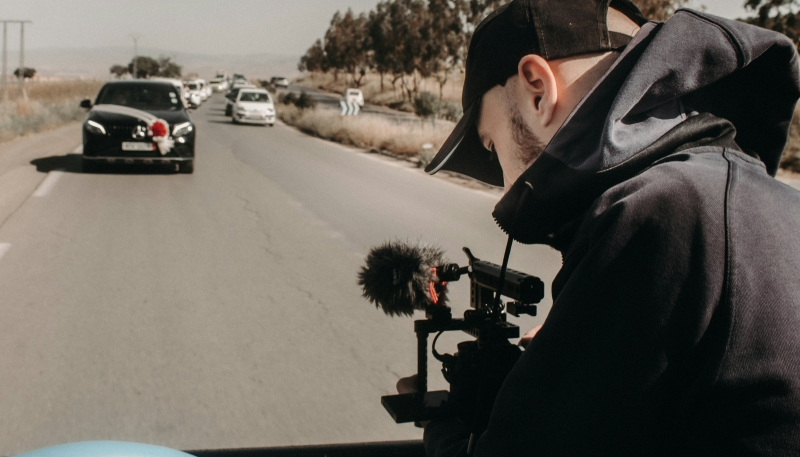
Life Changing Injury During Filming From A Moving Vehicle
Thu 15th Oct 2026

HSE Urges Early Action On Noise And Vibration Risks
Tue 13th Oct 2026
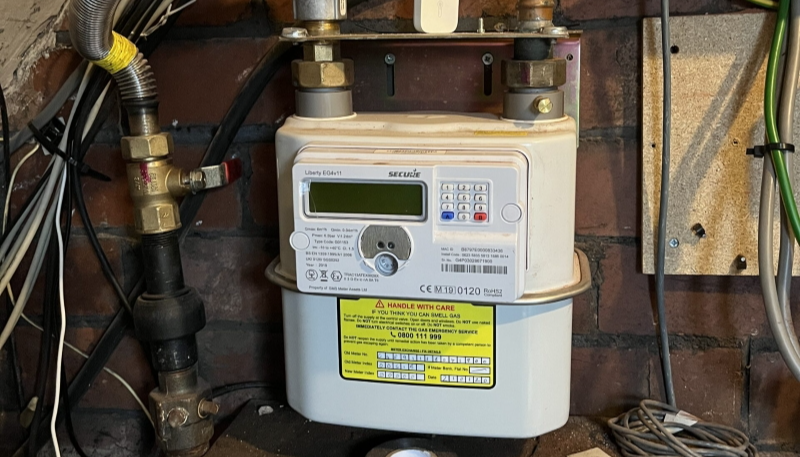
Landlord Sentenced For Failing To Arrange Annual Gas Safety Checks
Mon 12th Oct 2026

Worker Suffers Partial Thumb Loss During Manual Handling Task
Wed 7th Oct 2026