
Hand Trapped In Print Rollers During Cleaning
Thu 5th Nov 2026 by HS Hub
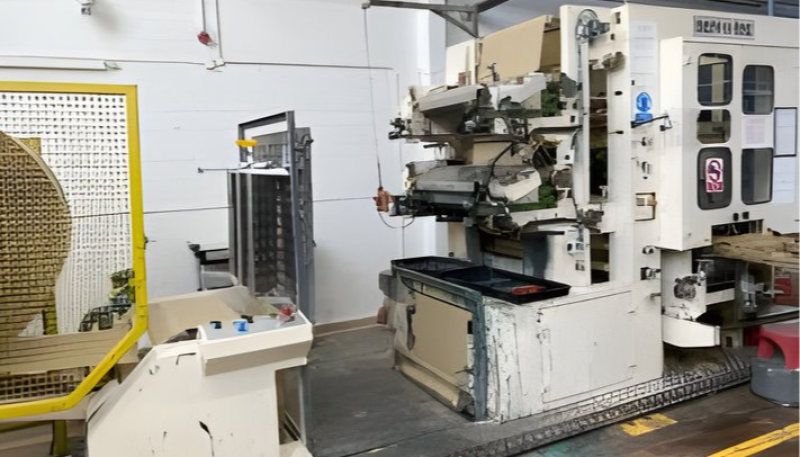
Hand Trapped In Print Rollers During Cleaning

Brief Summary
An operator cleaning the rollers on a tissue embossing machine had their hand drawn into the moving rollers and suffered multiple amputations. HSE found the machine lacked an interlocked guard so dangerous parts were accessible during operation and the employer had a history of similar enforcement notices. The case shows the practical consequences of failing to fit appropriate guards and of not acting on repeated enforcement.
What Was The Incident?
While cleaning the rollers of a machine used to emboss logos onto tissue paper, an experienced machine operator had their right hand drawn into the print rollers and trapped for several minutes. The operator sustained serious injuries including full amputations of the little finger and ring finger and partial amputations to the index and middle fingers and has ongoing increased sensitivity and loss of function in the dominant hand. HSE found the machine did not have an interlocked or fixed guard to prevent access to the dangerous moving parts and that the dangerous parts could be reached while the machine was operating. The employer had previously received enforcement for machinery guarding issues during inspections in 2021, 2019, 2014 and 2010.
What Was The Outcome?
The employer pleaded guilty to breaching The Provision and Use of Work Equipment Regulations 1998 Regulation 11(1). The company was fined £80,000 and ordered to pay £4,756 in costs following the prosecution on 3 November 2026. HSE brought the enforcement action.
Key Points To Consider
Machine guarding. Confirm that fixed or interlocked guards are fitted to prevent access to rollers while the machine is running and test that interlocks reliably stop the machine if a guard is opened or removed.
Isolation and safe cleaning. Require isolation and a lock off procedure before cleaning; use written permits to work and supervision where cleaning exposes dangerous parts to ensure the machine cannot be started.
Risk assessment and enforcement follow up. Review risk assessments to identify dangerous parts and the expected control measures, and act promptly on previous enforcement findings to prevent repeat failures.
Tags: regulatory, news, machinery safety, lockout tagout, compliance, incident management
In Other News




Sign up to our newsletter
Most Read




Trainee Scaffolder Killed After Five Metre Fall
Fri 6th Nov 2026

Fragile Barn Roof Fall Leads To Fine
Thu 5th Nov 2026
Tyre Fitter Killed After Truck Fell During Roadside Repair
Wed 4th Nov 2026
Crown Censure After Fatal Armoured Vehicle Training Incident
Tue 3rd Nov 2026

Roof Fire During Welding On 14 Storey Apartment Block
Fri 30th Oct 2026
Worker Crushed By Reversing Recovery Truck
Thu 29th Oct 2026