
Managing Noise Exposure at Work: A Compliance and Assurance Checklist for Supervisor
Thu 3rd Dec 2026 by HS Hub
Managing Noise Exposure at Work: A Compliance and Assurance Checklist for Supervisor

A workplace noise management system should provide clear evidence that exposure risks are understood, suitable controls are operating and employees' hearing is being protected. Managers need to examine assessment quality, action plans, equipment performance and health surveillance results. The Control of Noise at Work Regulations 2005 apply in Great Britain, while the corresponding Northern Ireland requirements are contained in the 2006 regulations.
Establishing Reliable Exposure Information
An effective noise management programme begins with an accurate understanding of employee exposure. A single noise measurement may provide useful information but cannot necessarily represent the exposure experienced throughout a working day. Employees may move between workstations, operate different machines or undertake activities with varying noise levels. Assessments should reflect these differences and account for relevant peak noise exposures.
In Great Britain, the lower and upper daily or weekly exposure action values are 80 dB(A) and 85 dB(A). Equivalent peak action values are 135 and 137 dB(C). The exposure limit values are 87 dB(A) and 140 dB(C), with permitted hearing protection attenuation taken into account when determining compliance with those limits. Managers should confirm that assessments were completed by competent people and that the findings identify who requires protection, what measures are necessary and which actions remain outstanding.
Management Responsibility for Noise Reduction
Where exposure reaches the upper action values, employers must establish and implement a programme of technical or organisational measures to reduce noise exposure. Management decisions should consider whether noisy processes can be changed, machinery replaced or acoustic controls introduced. Purchasing decisions also influence future exposure. Selecting quieter equipment can prevent unnecessary noise risks from becoming established within operations. For existing machinery, maintenance, enclosures, silencers and changes to workplace layout may offer practical reductions.
Noise-control plans should identify responsible individuals, completion dates and arrangements for checking effectiveness. Supervisors provide operational feedback on whether proposed measures are workable and whether completed improvements are delivering the expected reduction.
Assessing Hearing Protection Arrangements
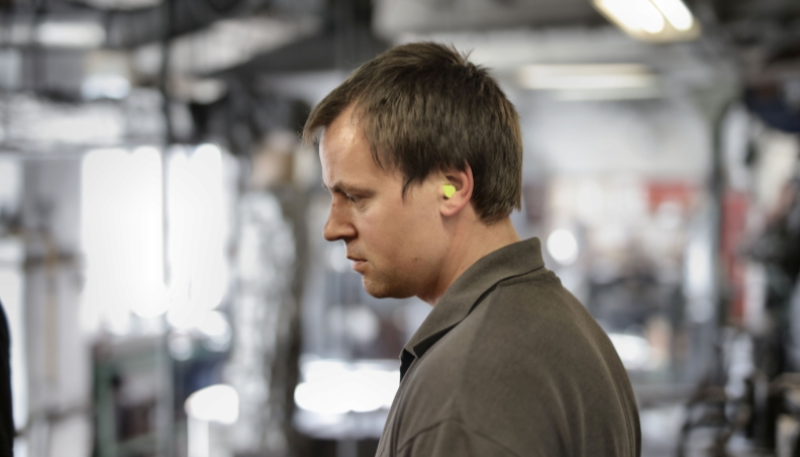
Issuing hearing protection does not establish that employees receive adequate protection. Managers should examine whether the selected equipment is suitable for the actual noise environment and compatible with other personal protective equipment.
Protection that reduces sound excessively may create communication difficulties or interfere with hearing warning signals. Adequate arrangements include correct fitting instruction, maintenance, replacement supplies and checks on use. At or above the upper exposure action values, suitable hearing protection must be provided and its use ensured. Designated hearing protection zones require effective management. Supervisors should observe working practices, particularly where employees frequently enter noisy areas or remove protection during activities.
Using Hearing Surveillance to Evaluate Controls
Health surveillance offers information about whether workplace arrangements are protecting employees from hearing damage. Employees who are regularly exposed above the upper action values, or who are otherwise at risk, require appropriate hearing surveillance. Regular hearing checks should operate under the direction of a suitably qualified occupational health professional.
Employers must retain the required employee health records and relevant fitness-for-work advice. Confidential medical records remain with the medical professional. Where surveillance identifies possible hearing damage, management should act on occupational health recommendations and reconsider the affected employee's exposure and controls. Reviewing results across groups of employees can also identify areas where existing preventive measures need improvement.
Reviewing Changes and Maintaining Evidence
Noise controls can become less effective when equipment deteriorates or working arrangements change. Managers should establish whether significant modifications, new machinery, altered production methods or changes in exposure duration require reassessment. Assessment records must contain relevant findings, while action plans should identify completed and outstanding measures.
Hearing protection training, maintenance arrangements and surveillance records also provide useful evidence when reviewing implementation. Regular management review should consider whether improvements are necessary, whether responsibilities remain clear and whether exposure risks are still adequately controlled.
Common Compliance Gaps
A frequent weakness is treating the original noise assessment as sufficient evidence of continuing compliance. Other shortcomings include incomplete action plans, limited checking of hearing protection effectiveness and failure to use hearing surveillance findings when reviewing controls. Noise-reduction projects may also remain unfinished when ownership, funding or completion dates are unclear.
Manager Checklist
- Review whether exposure information covers relevant employee groups and working patterns.
- Identify outstanding actions from noise assessments and confirm responsible owners.
- Examine opportunities to purchase quieter machinery or modify existing processes.
- Check whether engineering controls are producing the intended reduction in noise.
- Review hearing protector selection, fitting instruction and replacement arrangements.
- Verify that appropriate employees are included in hearing surveillance programmes.
- Confirm that assessment reviews, maintenance findings and occupational health recommendations result in appropriate action.
FAQ
How should noise-reduction improvements be prioritised?
Consider the level of risk, the number of employees exposed, available control measures and what is reasonably practicable. Assign responsibilities and timescales, then verify the effectiveness of completed work.
Should confidential hearing test results be kept in personnel files?
Employers must maintain the required health surveillance records and relevant fitness-for-work information. Confidential medical records should remain with the medical professional.
Is an annual noise risk assessment mandatory?
The regulations do not prescribe a universal annual reassessment interval. Assessments require review when relevant circumstances change and at suitable intervals. Guidance recommends checking whether a review is needed at least approximately every two years.
Can new equipment increase noise exposure even if existing controls remain effective?
Yes. Different equipment, operating methods or employee exposure patterns may change the overall risk. Purchasing and commissioning decisions should therefore take account of noise performance, with assessments reviewed where necessary.
Tags: article, noise & vibration, ppe
In Other News



Sign up to our newsletter
Most Read





Trainee Scaffolder Killed After Five Metre Fall
Fri 6th Nov 2026


Fragile Barn Roof Fall Leads To Fine
Thu 5th Nov 2026

Hand Trapped In Print Rollers During Cleaning
Thu 5th Nov 2026
Tyre Fitter Killed After Truck Fell During Roadside Repair
Wed 4th Nov 2026

Crown Censure After Fatal Armoured Vehicle Training Incident
Tue 3rd Nov 2026


Roof Fire During Welding On 14 Storey Apartment Block
Fri 30th Oct 2026