
Occupational Ill Health Statistics 2026: Considerations for Safety Professionals

Occupational Ill Health Statistics 2026: Considerations for Safety Professionals

Overview
Work-related ill health continues to place substantial demands on workers and employers across Great Britain, with 35 million working days lost during 2025/26. The latest figures identify work-related stress, depression and anxiety as the largest category of occupational illness, followed by musculoskeletal disorders. For senior managers and health and safety professionals, the findings provide an opportunity to review occupational health priorities and examine whether current prevention measures remain effective.
Occupational Illness Accounts for Substantial Working Time Lost
The estimated 35 million working days lost through work-related illness illustrate the continuing consequences of occupational health problems.
The figure covers both new and long-standing cases, including employees whose conditions may affect them over extended periods. Across Great Britain, approximately 1.8 million workers reported work-related ill health during 2025/26, while 699,000 experienced a new case.
Working days lost per worker have remained broadly stable over the past four years. However, they continue to exceed the rates recorded before the pandemic, indicating that recent years have not produced a sustained return to earlier levels.
For management teams, these figures provide context for reviewing how occupational health is represented within organisational performance reporting. Absence data alone may not provide a complete picture of work-related health risks, particularly where employees continue working while experiencing symptoms.
Psychological Health Is the Largest Reported Category
Almost half of all reported work-related illness cases involved stress, depression or anxiety. The estimated total reached 891,000 workers in 2025/26, including 357,000 new cases.
These conditions accounted for 18.2 million lost working days. This was greater than the combined working days lost through the other categories of occupational illness.
The pattern over time is also relevant. Although the rate has not followed a consistent direction during the past four years, it remains above pre-pandemic levels.
Higher-than-average rates were recorded in public administration and defence, human health and social work, and education over the three-year period ending in 2025/26.
Employers should use their own workplace information to identify potential sources of work-related stress and determine whether existing risk controls address the circumstances affecting employees.
Physical Health Risks Remain Substantial
Work-related musculoskeletal disorders affected approximately 477,000 workers during 2025/26. These conditions accounted for 26% of reported occupational illness cases and resulted in 7.5 million lost working days.
The distribution of cases shows that musculoskeletal risks extend beyond back injuries. Back conditions accounted for 38%, upper limb and neck conditions represented 37%, and lower limb disorders made up 25%.
The figures identify construction and transportation and storage as industries with higher-than-average rates over the combined 2023/24 to 2025/26 period.
For employers, the practical question is whether working methods, task demands and existing control measures remain suitable. Reviews should reflect the particular activities undertaken rather than relying entirely on general sector comparisons.
Historical Exposure Continues to Cause Fatal Disease
The longer-term consequences of occupational exposure are evident in the estimated 13,000 deaths each year associated with past workplace exposure, primarily to dust or chemicals.
Around 11,000 of these deaths are attributed to occupational lung diseases. The figures include conditions associated with exposures that occurred many years before illness developed.
The annual mortality estimates are separate from the Labour Force Survey figures for current work-related ill health. They should not be combined or interpreted as though they measure the same reporting period or population.
Their continued inclusion in national health statistics provides a reason for employers to maintain attention on hazardous substance exposure and the effectiveness of preventive arrangements.
Tags: article, strategy, environmental health, ergonomics, core health & safety
In Other News




Sign up to our newsletter
Most Read





Trainee Scaffolder Killed After Five Metre Fall
Fri 6th Nov 2026


Fragile Barn Roof Fall Leads To Fine
Thu 5th Nov 2026

Hand Trapped In Print Rollers During Cleaning
Thu 5th Nov 2026
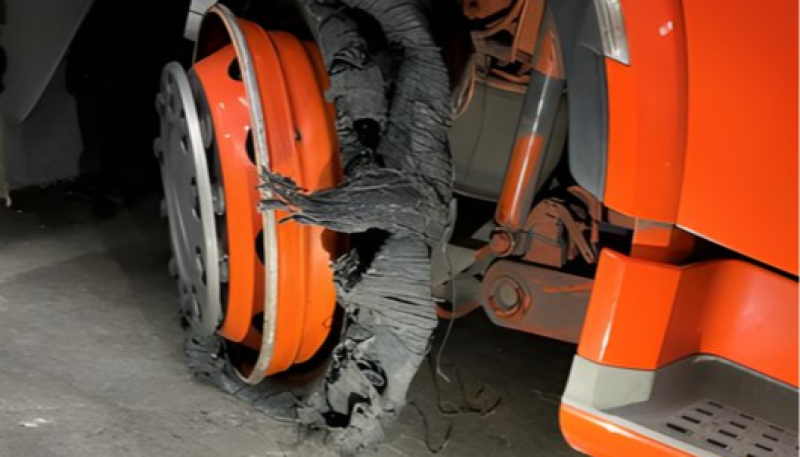
Tyre Fitter Killed After Truck Fell During Roadside Repair
Wed 4th Nov 2026

Crown Censure After Fatal Armoured Vehicle Training Incident
Tue 3rd Nov 2026



Roof Fire During Welding On 14 Storey Apartment Block
Fri 30th Oct 2026