
Managing Business Waste: What Managers Need to Control
Thu 6th Aug 2026 by HS Hub

Managing Business Waste: What Managers Need to Control

Waste compliance is best managed as a chain of decisions, beginning with purchasing and ending at an authorised recovery or disposal site. Managers need assurance that waste is minimised, correctly classified, securely stored, transferred through authorised businesses and supported by records that can be checked.
Start with what the business produces
Managers should understand where waste arises, including packaging, damaged stock, maintenance residues, office waste and production materials. This helps distinguish routine non-hazardous waste from streams needing specialist controls.
The waste hierarchy requires businesses in England and Wales to prioritise prevention, then preparing for reuse, recycling, other recovery and disposal. In practice, managers should challenge avoidable packaging, over-ordering and processes that create unnecessary offcuts or rejected materials before focusing on collection.
Classify waste before it is mixed
The producer is usually best placed to identify what the waste contains. A collector may not know which process generated it or whether it contains substances that make it hazardous.
Sites should use an accurate description and the appropriate classification code. Hazardous waste, and special waste in Scotland, needs separate handling and consignment procedures. Any uncertainty should be resolved before the material is combined with another stream or removed.
Match arrangements to national recycling rules
A UK-wide policy should not assume that the same bin system is legally sufficient everywhere.
English workplaces in scope must separate dry recyclables, food waste and residual waste. The rules have applied since 31 March 2025, although micro-firms with fewer than ten full-time-equivalent employees have until 31 March 2027.
Wales requires specified streams to be separated, including food, glass, paper and card, metals and cartons, unsold textiles and small electrical equipment. Scotland requires organisations to present metal, plastic, glass, paper and card for separate collection; certain food businesses must also separate food waste. Northern Ireland operates its own duty-of-care and authorisation system.
Managers should compare collection contracts, bin layouts and staff instructions with the rules for each site.
Control storage and responsibility
Waste should be kept in containers suited to its properties and secured against leakage, wind, pests and unauthorised access. Labels should allow staff and contractors to identify the contents. Hazardous or incompatible materials should not be combined.
Responsibility should be clear where waste is managed by a landlord, facilities contractor or shared-site operator. The producer should know who presents each stream for collection and who retains the supporting documents. England’s workplace recycling rules may apply to landlords or facilities management companies that present waste on behalf of the producer.
Verify collection and destination
Before appointing a contractor, check whether the carrier, transporter, broker or dealer holds the required registration. The receiving facility should have a permit, authorisation, licence or exemption allowing it to accept that waste. Checks should be repeated when the contractor, registration or destination changes.
A business transporting its own waste, or storing, treating or recovering waste beyond ordinary temporary storage, should confirm whether separate registration or authorisation is required.
Keep an auditable record
Non-hazardous transfers require a transfer note or equivalent information describing the waste, amount, container, parties and movement. Repeated collections may use a season ticket where the details remain unchanged. England, Wales and Scotland generally require these records to be kept for at least two years.
Hazardous or special waste requires consignment documentation and different retention arrangements. The business should retain its own records rather than relying solely on the contractor.
Common compliance gaps
Weaknesses often appear where waste management is treated solely as a facilities contract. Typical examples are bins with no clear owner, outdated contractor checks, inaccurate descriptions, mixed waste that should be separated and no evidence of the final destination. These are signs that operational control and documentary evidence may have become disconnected.
Manager checklist
- Does the business know which activities create each waste stream?
- Are reduction opportunities considered before collection?
- Is waste classified before it is mixed or removed?
- Do bins and contracts meet the applicable national rules?
- Is storage secure and suitable?
- Are contractors and destinations independently checked?
- Does the business retain complete transfer records?
- Are arrangements reviewed after operational changes?
Frequently Asked Questions
Who produces waste created during contracted work?
A contractor or subcontractor may be the producer where its activity creates the waste. The contractual and operational arrangements should make responsibility clear.
Can the business rely on a contractor’s certificate?
It should verify registration and destination through the relevant regulator’s public register and retain evidence of the check.
Is office food waste covered in England?
Yes. Food waste must be separated even where the workplace does not serve food, subject to the temporary micro-firm exemption.
When might authorisation be needed?
It may be required where the business stores, treats, recovers or disposes of waste rather than merely holding it temporarily for collection. The applicable permit, authorisation or exemption depends on the activity and nation.
Tags: article, compliance, regulatory, environmental health

In Other News




Sign up to our newsletter
Most Read





Worker Suffers Arm Fractures After Unguarded Conveyor
Fri 4th Sep 2026

Farmer Fined After ATV Overturn Kills Employee
Fri 4th Sep 2026
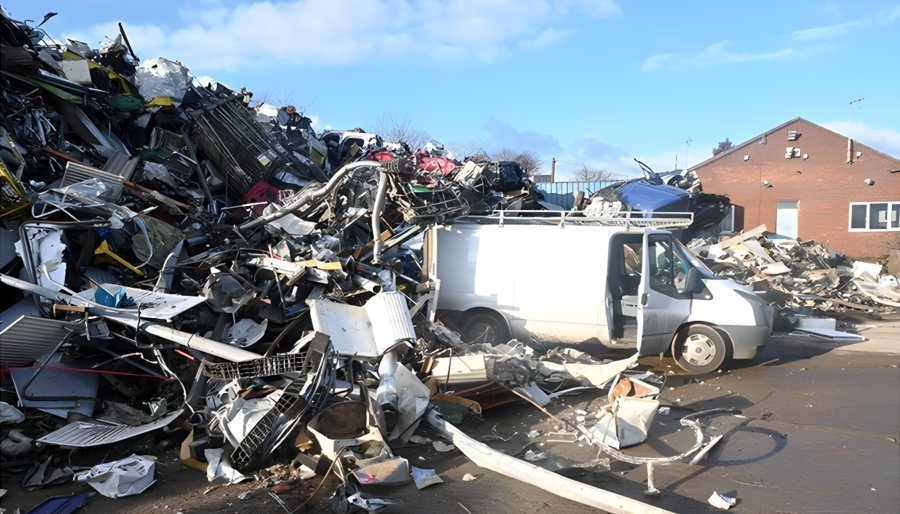
Public Injured When Scrap Metal Pile Collapsed
Wed 2nd Sep 2026

Supervisor Severely Injured After Entering Live Palletiser
Fri 28th Aug 2026


Six Figure Fine After Repeated Corrosion Under Insulation Leaks
Wed 26th Aug 2026
Worker Fractures Twelve Ribs During Pillar Drill Lifting Incident
Wed 26th Aug 2026

Strengthening Preventive Workplace Safety
Tue 25th Aug 2026


When Does an Enclosed Workplace Become a Confined Space?
Thu 20th Aug 2026