Managing Fire Safety Systems: Assurance Checks for Doors, Exits and Alarms
Thu 3rd Sep 2026 by HS Hub
Managing Fire Safety Systems: Assurance Checks for Doors, Exits and Alarms

Summary
A fire safety inspection should test whether the arrangements assumed by the fire risk assessment still exist in practice. For managers, that means examining the route from detection and warning through protected circulation spaces and final exits, then checking that inspection, maintenance and defect management support those arrangements.
The applicable legal framework depends on location. England and Wales use the Regulatory Reform (Fire Safety) Order 2005, Scotland applies the Fire (Scotland) Act 2005 with the Fire Safety (Scotland) Regulations 2006 for most non-domestic premises, and Northern Ireland has its own Order and Regulations.
Start With the Fire Risk Assessment
Fire doors, escape arrangements and alarms should not be managed as unrelated assets. Their specification and operation should follow from the assessment of fire risk and the evacuation arrangements for the premises.
Managers should review whether occupancy, layout or use has changed since the assessment was completed. A new partition, altered circulation route, different working hours or a change in how areas are occupied can affect escape and warning arrangements.
Multi-occupied buildings require particular attention to co-operation. A route may cross a common area controlled by a landlord or managing agent, while alarm systems or fire doors may form part of shared building arrangements. Responsibility for inspection and corrective work should therefore be clear.
Follow the Evacuation Route From the Workplace to Safety
A useful management inspection starts where people actually work and follows the route they would use during an evacuation.
Routes should remain direct enough for the premises, free from obstruction and capable of serving the people expected to use them. Managers should include alternative routes, stairs, final exits and the area immediately outside the building.
Doors on escape routes also need to be usable without delay. Managers should check fastening arrangements and confirm that security measures do not make emergency opening dependent on finding a key.
Changes in occupancy matter. Arrangements that work for employees familiar with the premises may require further consideration where visitors, members of the public or people needing assistance are present.
Examine Fire Doors as Complete Assemblies
A fire door should be inspected as an assembly, not simply as a door leaf. The frame, glazing, seals, closing arrangements and ironmongery may all affect how it performs.
Self-closing doors should close correctly. A closer that leaves the door partly open, damage that prevents the door meeting its frame, or an obstruction placed in the closing path requires attention.
Where doors are linked to the fire alarm through electromagnetic hold-open devices or similar arrangements, managers should confirm that the doors release when required. Testing the alarm without observing associated equipment can miss a fault elsewhere in the fire safety arrangements.
Test the Warning and the Response
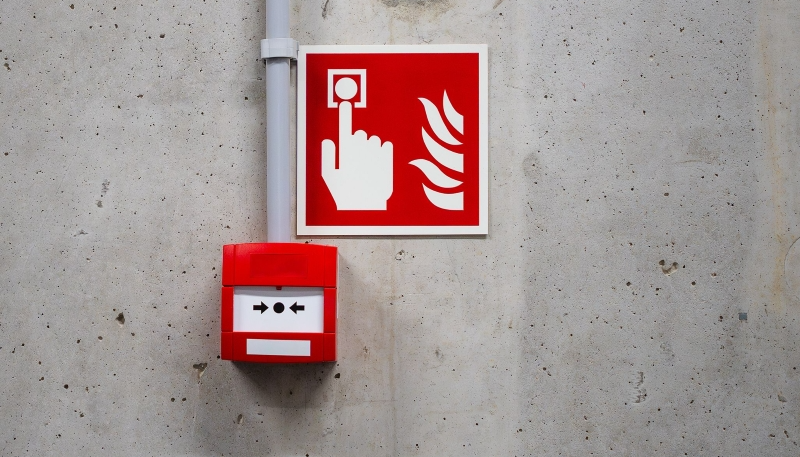
The purpose of a fire warning system is to alert occupants so that the emergency plan can be put into action. The appropriate system varies with the size, complexity and use of the premises.
Assurance should cover more than whether a sounder operates. Managers should consider whether the warning can be perceived throughout occupied areas and whether arrangements address people who may not hear a conventional audible alarm.
Staff also need to know what the alarm means and what action follows. Training should cover how to raise the alarm, what to do when it operates and how people are expected to reach safety.
Northern Ireland requires particular attention to local arrangements for automatic fire alarms. Current fire and rescue service procedures for occupied commercial workplaces require duty holders to have suitable arrangements for safely investigating automatic alarm activations before contacting the service unless a fire or signs of fire are confirmed. Premises managers should follow the current Northern Ireland guidance applicable to their building.
Use Inspection Records to Manage Defects
Inspection records should allow managers to see whether identified faults have actually been corrected. A log containing repeated entries for the same defective closer, blocked route or alarm fault without evidence of action is a management problem.
Records can cover checks of final exits, fire doors, alarm systems, emergency lighting and other fire precautions relevant to the premises. People carrying out technical maintenance or testing should have the competence required for the work assigned to them.
Common Compliance Gaps
Fire precautions often deteriorate through ordinary changes in use. Furniture appears in corridors, deliveries obstruct exits, doors are wedged for convenience and modifications are made without checking their effect on the fire strategy.
Management weaknesses include fragmented responsibility between occupiers and landlords, alarm tests that ignore linked devices, defects remaining open for long periods and inspections being recorded without checking the physical condition of the premises.
Manager Checklist
- Compare current layouts and occupancy with the assumptions in the fire risk assessment.
- Walk each evacuation route from occupied areas through to a place outside the building.
- Confirm escape doors and security devices allow prompt emergency opening.
- Inspect fire door assemblies, including closing arrangements and visible damage.
- Observe whether alarm-linked doors and other relevant devices respond during testing.
- Check that warning methods remain suitable for the people using the premises.
- Review shared-building responsibilities with landlords, managing agents or other occupiers.
- Sample inspection records and close out unresolved fire safety defects.
Frequently Asked Questions
Who is responsible for fire precautions in a shared building?
There may be more than one person or organisation with fire safety responsibilities. Those with control need to co-operate and co-ordinate where their arrangements affect each other.
Should a fire alarm test include linked fire doors?
Where door release arrangements are connected to the fire warning system, their correct operation should form part of the assurance process applicable to those systems.
What should managers check outside a final exit?
The route should allow people to move away from the building safely. An obstruction immediately outside an exit can compromise an otherwise available escape route.
Does a change in office layout require the fire risk assessment to be considered again?
A change that could affect escape arrangements, occupancy or other fire precautions should prompt review of whether the existing assessment remains valid.
Are automatic fire alarm response arrangements the same throughout the UK?
No. Fire safety legislation and fire and rescue service arrangements differ between UK jurisdictions. Managers should use the current requirements and official guidance for the location of their premises.
Tags: article, fire safety, audit, compliance
In Other News




Sign up to our newsletter
Most Read


Apprentice Dies After Engine Room Fire Suppression Activation
Fri 16th Oct 2026
Electrical Company Fined After Worker Crushed By Unsecured Load
Fri 16th Oct 2026

Life Changing Injury During Filming From A Moving Vehicle
Thu 15th Oct 2026


HSE Urges Early Action On Noise And Vibration Risks
Tue 13th Oct 2026
Landlord Sentenced For Failing To Arrange Annual Gas Safety Checks
Mon 12th Oct 2026


Worker Suffers Partial Thumb Loss During Manual Handling Task
Wed 7th Oct 2026