Construction Company Fined After Fall Into Exposed Excavation Hole
Wed 3rd Jun 2026 by HS Hub
Construction Company Fined After Fall Into Exposed Excavation Hole

Brief Summary
A man died after falling into an exposed excavation hole at a building site where new foundations had been dug for flats. HSE found the employer had not provided safe routes for people moving around the site and relied on inadequate temporary bridging that was slippery and poorly protected, including missing lighting and handrails. The site was only made safe following HSE enforcement action after the fatality.
What Was The Incident?
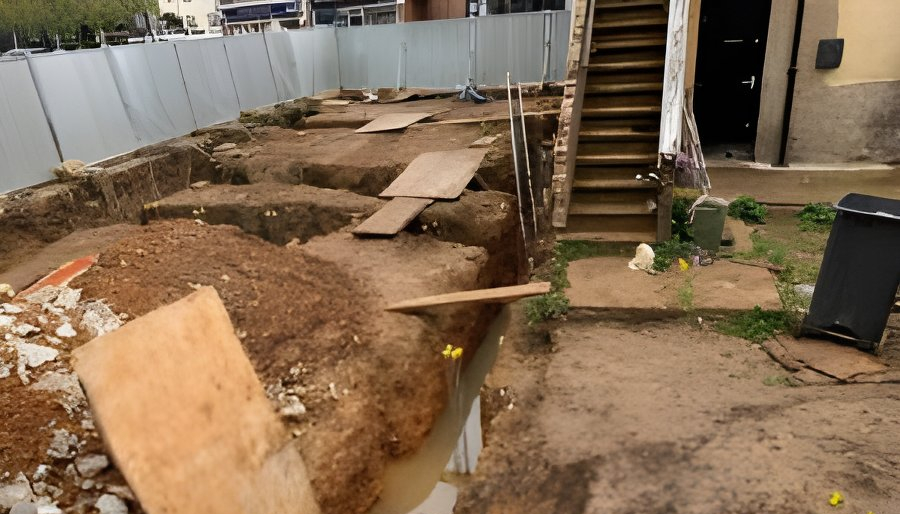
The employer was building several flats and had dug new excavation foundations for the building footings. The excavations crossed the site, but there were no designated safe walkways. Temporary boards and planks were used as bridges, but they were slippery and bowed when stepped on, increasing the risk of a fall. The site was open to the weather, making it likely to be slippery after rain. There was no dedicated lighting, and the boards and planks had no handrails and were not secured. After a night out, the man attempted to access his adjoining home and fell into an exposed excavation hole filled with rainwater. His body was not found until about 2pm the following day.
What Was The Outcome?
The company was sentenced in absence for breaching Regulation 22(2) of the Construction Design and Management Regulations 2015. It was fined £20,000 and ordered to pay £5,000 in costs. Since the incident, the company has entered liquidation.
Key Points To Consider
Do not rely on unsafe temporary crossing arrangements. Temporary boards and planks used as bridges were slippery and could bow when walked on, showing that ad hoc crossings must be genuinely safe for regular use, including in wet conditions.
Provide designated safe walkways over excavations. Excavations criss crossed the site without designated safe walkways, so people had no planned routes that reduced the risk of stepping into or falling into holes.
Make sure barriers and protection are in place before anyone is at risk. HSE guidance emphasises that excavations must be made safe, including protecting edges with substantial barriers where people are liable to fall.
Control the site environment, including weather and visibility. The site was open to the weather, and there was no dedicated lighting, which together would make slips and trips more likely and increase the chance of people failing to notice dangers.
Plan and implement safety measures early, not after fatalities. The employer only made the site safe after HSE inspectors intervened following the death, including installing dedicated walkways using scaffolding framework, highlighting the need to ensure controls are in place from the start of excavation work.
Tags: regulatory, news, construction safety, fall protection, access equipment, compliance
In Other News


Sign up to our newsletter
Most Read




Runaway Vehicle During Recovery Operation Causes Serious Injuries
Fri 16th Oct 2026
Apprentice Dies After Engine Room Fire Suppression Activation
Fri 16th Oct 2026

Life Changing Injury During Filming From A Moving Vehicle
Thu 15th Oct 2026


HSE Urges Early Action On Noise And Vibration Risks
Tue 13th Oct 2026
Landlord Sentenced For Failing To Arrange Annual Gas Safety Checks
Mon 12th Oct 2026

Worker Suffers Partial Thumb Loss During Manual Handling Task
Wed 7th Oct 2026