
Bricklayer Hospitalised After Upper Floor Collapse
Tue 18th Aug 2026 by HS Hub
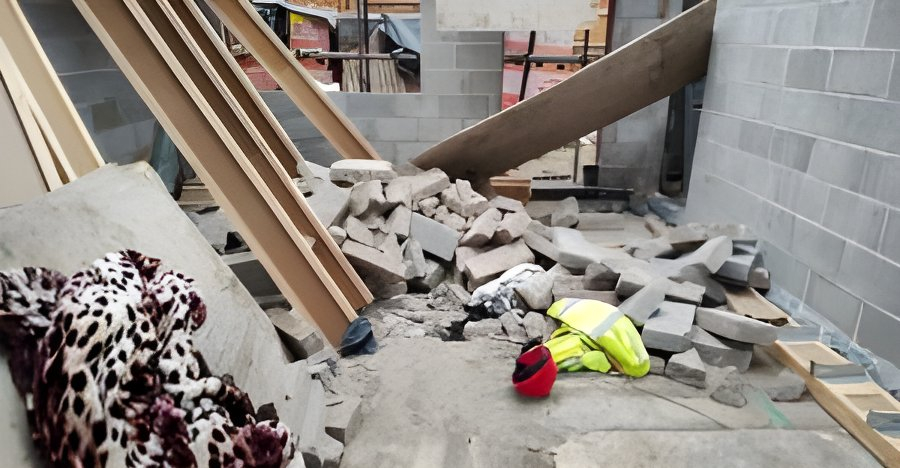
Bricklayer Hospitalised After Upper Floor Collapse

Brief Summary
A 25 year old bricklayer was seriously injured when the upper floor he was working on collapsed after being overloaded with concrete blocks and not built to the manufacturer's design. An HSE investigation found failures in planning, site management, scaffolding and work at height arrangements. The case resulted in prosecution, a fine and enforcement notices and offers practical lessons for health and safety professionals on managing temporary structures and construction phase duties.
What Was The Incident?
On 4 June 2024 at a house under construction in Oldham a bricklayer working on the upper level fell when the floor beneath him collapsed. Multiple concrete blocks stored on the floor fell with him. He suffered fractures to his right leg, hip and left hand, required surgery and was hospitalised for a month. HSE found the floor had been overloaded and had not been constructed in accordance with the manufacturer's design. Inspectors also identified unsafe scaffolding, inadequate arrangements for work at height, a lack of fire alarms and a lack of competent site management. Multiple enforcement notices were issued.
What Was The Outcome?
The principal contractor pleaded guilty to breaching Regulation 13(1) of the Construction (Design and Management) Regulations 2015. The company was fined £30,000 and ordered to pay £4,883 in costs, payable within three years, at Warrington Magistrates Court on 11 August 2026. HSE inspectors issued multiple enforcement notices at the site.
Key Points To Consider
Material storage and floor loading. Review temporary floor design and load capacity, confirm construction matches the manufacturer's instructions and set controls to prevent storing heavy materials on unfinished or non compliant floors.
Construction phase planning and supervision. Check that the principal contractor has planned managed and monitored the construction phase in line with Regulation 13(1) of the Construction (Design and Management) Regulations 2015 and that competent site management and supervision are in place.
Scaffolding work at height and emergency arrangements. Inspect scaffolding and work at height arrangements for adequacy, verify competent oversight of access and fall prevention measures and confirm fire detection and emergency arrangements are functional.
Tags: regulatory, news, construction safety, work at height, fall protection, access equipment, contractor safety
In Other News




Sign up to our newsletter
Most Read



Electrical Company Fined After Worker Crushed By Unsecured Load
Fri 16th Oct 2026
Apprentice Dies After Engine Room Fire Suppression Activation
Fri 16th Oct 2026

Life Changing Injury During Filming From A Moving Vehicle
Thu 15th Oct 2026


HSE Urges Early Action On Noise And Vibration Risks
Tue 13th Oct 2026
Landlord Sentenced For Failing To Arrange Annual Gas Safety Checks
Mon 12th Oct 2026


Worker Suffers Partial Thumb Loss During Manual Handling Task
Wed 7th Oct 2026